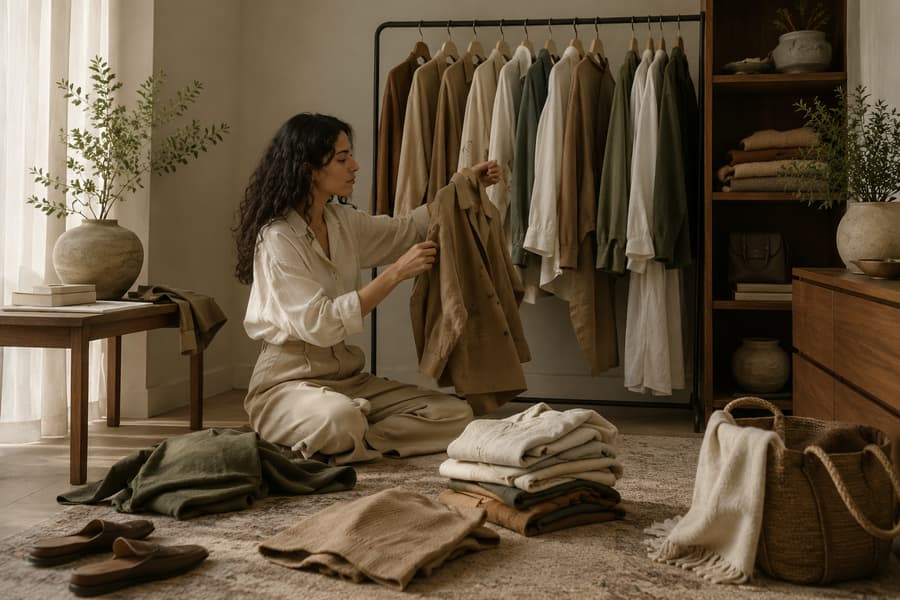
Wardrobe declutter decisions can feel emotional because clothes often carry memories, hopes, guilt, and money stories. A closet is not only a storage space. It reflects past versions of your life, future ideas, and daily frustration. That is why deciding what to keep, toss, or donate can feel harder than expected. A better process removes some of that pressure by asking clearer questions. You do not need to judge every item harshly. You need to understand whether it supports your current life. A practical closet sorting method helps make those decisions calmer, faster, and more useful.
Wardrobe Declutter Decisions feel personal because clothing connects to identity. An old blazer may remind you of a former job. A dress may represent a body, event, or confidence level that has changed. A useful wardrobe refresh system gives you space to notice those emotions without letting them control the whole closet. You can respect the memory and still release the item. Keeping everything does not preserve your life. It often hides the pieces that actually serve it. Decluttering creates room for the present.
Wardrobe Declutter Decisions should begin with your actual schedule. Think about work, home, errands, events, travel, climate, and comfort needs. A practical closet audit process compares clothing to real routines. If most of your life is casual, your closet should not be dominated by formal pieces. If your workplace changed, your clothes may need to shift too. This does not mean removing every occasional item. It means giving prime space to what supports your week. A closet should make daily dressing easier, not harder.
Good sorting needs clear categories. Keep items that fit, feel good, and work with your life. Donate items in wearable condition that no longer serve you. Toss or recycle pieces that are damaged beyond useful repair. A helpful clothing donation plan keeps the process responsible. Avoid donating items that are stained, broken, or unusable. Those create extra work for charities. If an item needs repair, decide whether you will actually fix it soon. If not, let that answer guide the decision. Clarity prevents piles from lingering.
Wardrobe Declutter Decisions become easier when you stop arguing with fit. Clothing that pinches, pulls, slips, or feels uncomfortable rarely becomes a favorite again. A useful fit-based closet review asks whether an item works on your body now. Not someday. Not after imaginary tailoring. Now. You deserve clothing that supports your present life. Keep pieces that make dressing easier. Release pieces that create pressure or avoidance. This is not failure. It is alignment. A closet becomes more peaceful when fit stops being a negotiation.
Wardrobe Declutter Decisions can reveal shopping patterns. You may notice repeated colors, unused trends, uncomfortable fabrics, or duplicate silhouettes. A smart wardrobe editing approach turns those patterns into future rules. Maybe you should stop buying dry-clean-only tops. Maybe you need fewer statement pieces and better basics. Maybe every unworn item came from a rushed sale. Decluttering should not only clear space. It should teach you what to buy differently next time. That is how a closet reset becomes a style upgrade.
After sorting, organize what remains by use, category, or outfit formula. Keep favorite pieces visible. Store occasional items separately. For donation-specific choices, read the What to Donate From Wardrobe article. For a full sorting rhythm, continue with the Keep Toss Donate Clothes article. The Wardrobe Refresh resource helps make closet decisions more practical and less emotionally exhausting.



Leave a comment