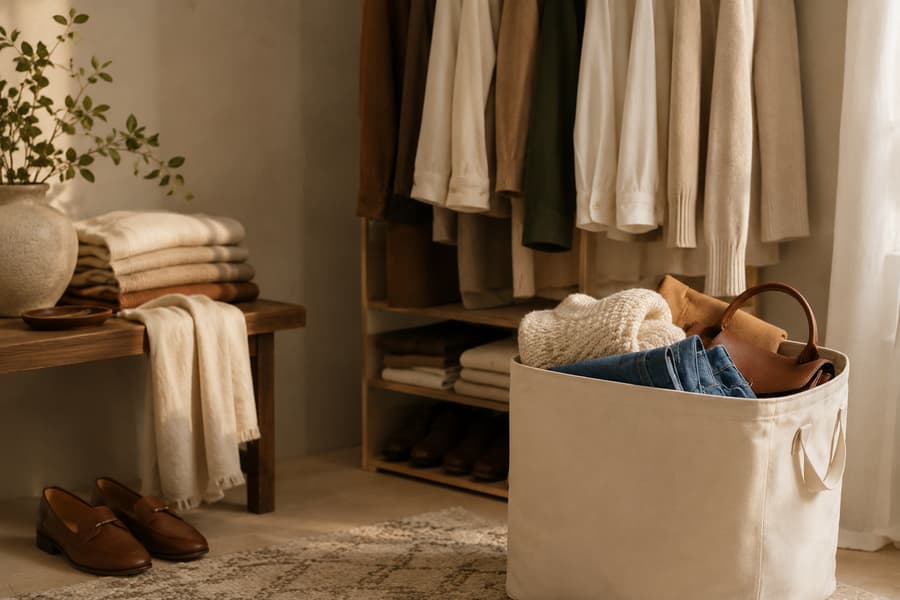
What to donate from wardrobe becomes clearer when you stop asking whether an item is still good and start asking whether it is still useful. Many unworn clothes are technically fine. They may fit someone, hold value, or look appealing on the hanger. That does not mean they belong in your closet forever. Donation works best when you release pieces that can serve someone else better than they serve you now. A thoughtful donation sorting system helps you separate generosity from guilt. It also keeps your wardrobe focused on the life you actually dress for.
What to Donate From Wardrobe matters because donation can be both practical and respectful. You clear space while giving wearable items a better chance elsewhere. A strong closet donation strategy starts with condition. Donate clean, functional pieces that someone could reasonably wear. Do not donate items with heavy stains, broken zippers, missing parts, or strong odors. Those should be repaired, recycled, or discarded responsibly. Donation is not a way to move clutter into someone else’s problem. It should be a thoughtful transfer of usable clothing.
What to Donate From Wardrobe often changes after life shifts. A new job, remote work, parenthood, moving climates, body changes, or style growth can all change what belongs. A practical wardrobe lifestyle review helps you identify items connected to old routines. You may no longer need certain office clothes, party pieces, shoes, or seasonal layers. Keeping them all can make your current closet harder to use. Releasing them does not erase the past. It creates space for clothing that supports who you are now.
Duplicates often hide inside closets because each item seems reasonable alone. Five black sweaters may feel useful until only one or two get worn. A useful duplicate clothing edit compares comfort, fit, fabric, and styling range. Keep the strongest versions. Donate the extras that no longer earn their space. This approach works for jeans, tees, cardigans, coats, shoes, and bags. Duplicates are not automatically bad. They become a problem when they crowd out better options. Editing them makes your closet easier to scan.
What to Donate From Wardrobe should include pieces that consistently feel wrong on your body. If clothing pulls, gaps, scratches, slips, or changes your posture, it may not support you. A thoughtful comfort-based closet edit respects how clothes feel, not just how they look. Keep only the pieces that you would choose willingly. Donate items that are wearable but never feel comfortable. Someone else may love them. You do not have to keep clothing that makes your daily routine harder. Fit is a practical reason, not an emotional failure.
What to Donate From Wardrobe is a powerful question before buying more. Donation reveals what your wardrobe already has too much of. A helpful pre-shopping closet reset prevents replacing clutter with new clutter. If you donate several uncomfortable shoes, shop differently next time. If you donate trendy tops, focus on better basics. If you donate neglected dresses, ask why they failed. Donation becomes useful feedback. It teaches you what not to repeat. That lesson can save money and closet space later.
Set a donation bag in your closet and review it monthly. Once it fills, clean the items and move them out quickly. For broader closet decisions, read the Wardrobe Declutter Decisions article. For sorting categories, continue with the Keep Toss Donate Clothes article. The Wardrobe Refresh resource helps make donation feel clear, responsible, and easier to complete.



Leave a comment